
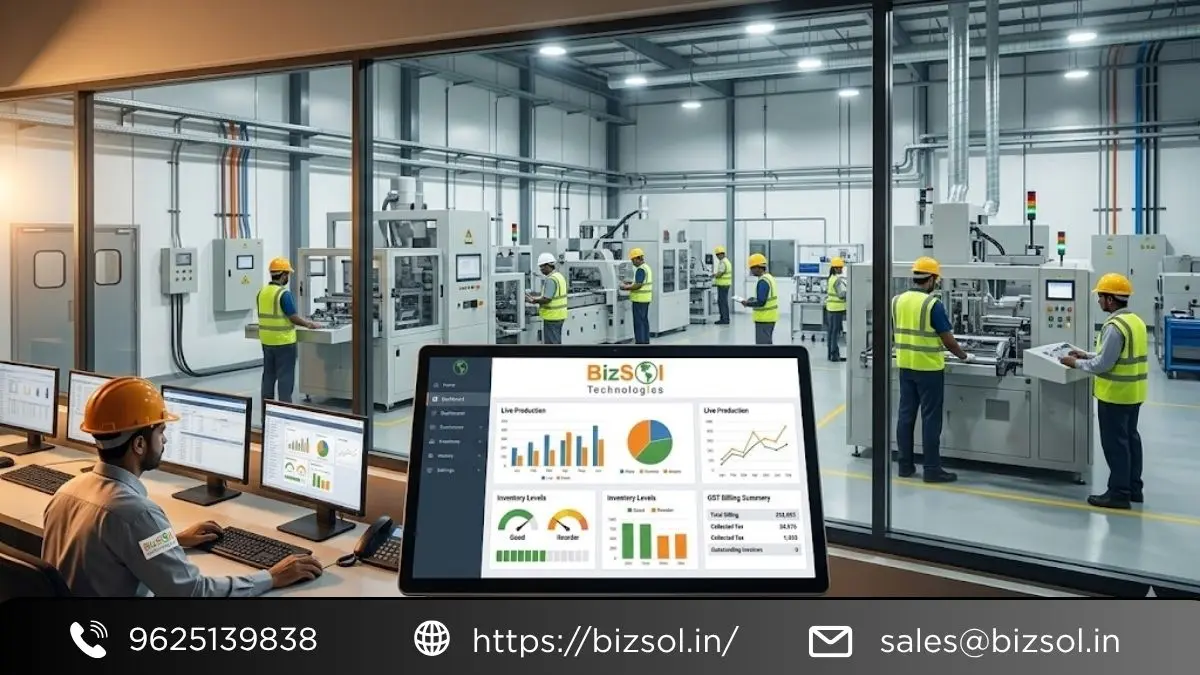

Running a manufacturing business in India is operationally demanding.
Production delays. Inventory mismatches. GST errors at month-end. Raw material shortages nobody saw coming. Dispatches going out late because production and logistics were working from different data.
Most factories do not fail because of bad products. They lose money because of disconnected processes. And in many Indian manufacturing businesses, those processes are still running on Excel sheets, WhatsApp updates, and end-of-day verbal reports.
The right manufacturing ERP software in India connects every department into one system. Production knows what materials are available. Accounts knows what has been dispatched. Purchase gets automatic alerts before stock runs out. Everyone works from the same data — without chasing each other for updates.
According to McKinsey & Company, manufacturers that adopt integrated digital operations can reduce operational costs by 15–20%. For Indian factories working on thin margins, that is real money — not a projected number.
This guide covers the best manufacturing ERP software in India for 2026. You will find honest comparisons, practical feature guidance, and clear advice on choosing the right ERP for your factory.
What is Manufacturing ERP Software?
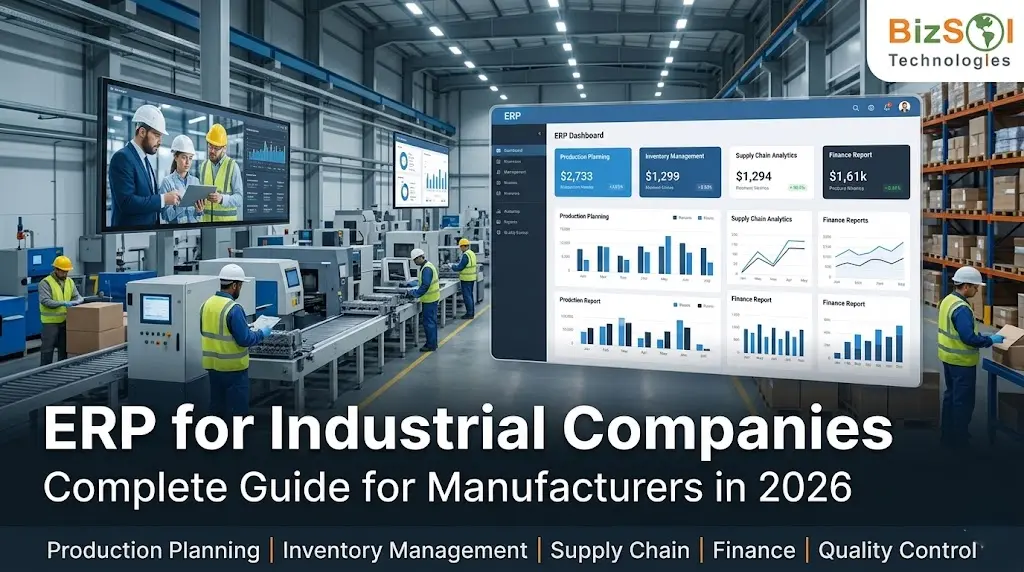
Manufacturing ERP software is a business management system that connects production, inventory management, procurement, finance, sales, and HR into one platform. It gives factory management a live view of operations and faster decision-making — without depending on manual reports or disconnected tools.
ERP stands for Enterprise Resource Planning. For a manufacturing business, it means one system where every department works from the same live data.
Without ERP, your production team may not know what stock is available. Your accounts team may not know what has shipped. Your purchase team finds out about shortages only after production has stopped.
ERP for manufacturing industry in India fixes this by connecting all departments automatically — so the right information reaches the right person at the right time.
ERP vs MRP vs MES — Key Differences
These three terms often get confused. Here is a simple breakdown:
System | Full Form | What It Does | Best For |
|---|---|---|---|
MRP | Material Requirements Planning | Plans raw material procurement based on production schedules | Small manufacturers focused on material planning |
MES | Manufacturing Execution System | Manages shop floor operations and machine-level data | Large factories with automated production lines |
ERP | Enterprise Resource Planning | Covers the entire business — production, finance, HR, sales, procurement | Small to large manufacturers needing full operational control |
ERP is the most complete option. Most modern ERP software for manufacturing in India includes MRP as a built-in module. Larger factories can also connect MES with ERP for machine-level data flow.
Why Indian Manufacturers Cannot Afford to Skip ERP in 2026
India has over 7,500 manufacturing clusters and millions of SMEs. Despite this scale, a large number of factories still run on manual processes or disconnected tools — creating measurable losses in productivity, inventory accuracy, and compliance every month.
NASSCOM reports that ERP adoption among Indian MSMEs remains well below potential, even as manufacturing grows under Make in India. Businesses that adopt ERP early consistently outperform competitors in delivery performance, cost control, and customer satisfaction.
Deloitte’s research on smart manufacturing shows that companies integrating ERP with production data make faster decisions and build stronger supply chain resilience. The gap between digital and non-digital manufacturers is widening — and it becomes harder to close the longer adoption is delayed.
For growing Indian factories, choosing the right ERP software for manufacturing industry in India is no longer a long-term IT decision. It is an immediate operational priority.
Common Manufacturing Problems ERP Solves
BOM errors — When bill of materials data is wrong, raw material orders go wrong with it. Production stops. Costs rise. ERP keeps BOM records accurate, version-controlled, and connected to every order automatically.
Raw material shortages — Most factories discover a shortage only when production has already stopped. ERP tracks stock levels continuously and sends reorder alerts before the problem reaches the shop floor.
Machine downtime — An unplanned breakdown during a critical production run is one of the most expensive events in manufacturing. ERP-based maintenance scheduling catches service needs before they become breakdowns.
Dispatch delays — When production and logistics teams work from different data, dispatches slip. ERP connects both departments so finished goods move out on time without manual follow-up.
Inaccurate production costing — Manually calculating job costs leaves room for significant errors. ERP tracks actual material usage, labour, and overhead per production order — giving accurate cost data without spreadsheet guesswork.
Poor demand forecasting — Without historical data, manufacturers either overproduce or fall short. ERP uses past order patterns to give procurement and production teams a more reliable planning base.
GST filing errors — Month-end GST reconciliation is a major pain point for industrial businesses doing it manually. A good ERP for manufacturing industry in India generates GST invoices, e-way bills, and tax reports automatically — reducing errors and saving hours every month.
Excel dependency — Spreadsheets work until they do not. As production volumes and teams grow, Excel creates version conflicts, data gaps, and audit risks. Moving to manufacturing ERP software in India gives factories one auditable system that scales with the business.
Must-Have Features in Manufacturing ERP Software in India
Not every manufacturer needs every ERP module. But if you are evaluating manufacturing ERP software in India for your factory or SME, these are the core capabilities that matter most.
1. Production Planning & BOM Management
ERP should schedule work orders based on machine capacity, material availability, and delivery timelines. Bill of Materials management sits at the centre of this — defining raw materials, components, and quantities for every product.
Multi-level BOM support is essential for manufacturers handling complex or custom production runs. Without accurate BOM data, production planning breaks down at the first stage.
2. Inventory & Warehouse Management
Accurate inventory management helps factories avoid stock shortages, overstocking, and unplanned stoppages. A good ERP tracks raw materials, work-in-progress, and finished goods across all storage locations.
Factories usually notice the fastest operational improvement here — often within the first few months of go-live — because inventory data stops being days out of date.
3. Batch, Lot & Quality Control
Batch and lot tracking traces every material from receipt to finished product. Combined with built-in quality control checkpoints at each production stage, this reduces defect rates and keeps factories audit-ready.
For industries like chemicals, pharma, and food processing, these two features are non-negotiable.
4. GST Billing & Financial Accounting
For Indian manufacturers, built-in GST compliance is not optional. ERP should generate GST invoices, e-way bills, and tax reports automatically — without needing a separate billing tool or paid add-on.
Financial accounting integration means production costs and procurement data flow directly into accounts without manual entry.
5. Procurement & Preventive Maintenance
Procurement management automates purchase orders, supplier tracking, and material receipts — reducing follow-ups and procurement delays. Preventive maintenance scheduling works alongside this by tracking machine service history and sending alerts before breakdowns happen.
Both features protect production continuity from two different directions.
6. Barcode & RFID Integration
Barcode and RFID support improves stock movement accuracy across the warehouse and shop floor. It removes manual data entry from inventory updates, goods receipt, and dispatch processes.
For factories managing high material volumes, this feature alone can significantly reduce daily errors.7. Multi-Plant & Analytics
Manufacturers running multiple plants or warehouses need centralized data across all locations. A strong manufacturing ERP system brings inventory, production, and finance into one dashboard.
Live analytics help track output, costing, and operational performance without waiting for weekly reports.
8. Cloud & Mobile Access
Cloud manufacturing ERP software in India offers lower upfront costs, automatic updates, and remote access. Mobile access allows plant managers and business owners to track production and inventory from anywhere.
For multi-location manufacturers, this is increasingly a practical necessity rather than a nice-to-have.
Buying Tip: Do not evaluate ERP by feature count alone. Focus on the features that match your production workflow, compliance needs, and business size. A focused system that your team can actually use will always outperform a feature-heavy platform that creates confusion during implementation.
Best Manufacturing ERP Software in India for 2026 (Honest Comparison)
Choosing manufacturing ERP software in India is not just a software decision — it is an operational one. The right platform depends on your factory size, industry, budget, and how complex your production workflows are.
Below is an honest comparison of the top 10 ERP options for Indian manufacturers. Each entry covers real strengths, practical limitations, and the type of business it fits best.
1. BizSol ERP — India’s #1 Manufacturing ERP Solution Provider Since 2001
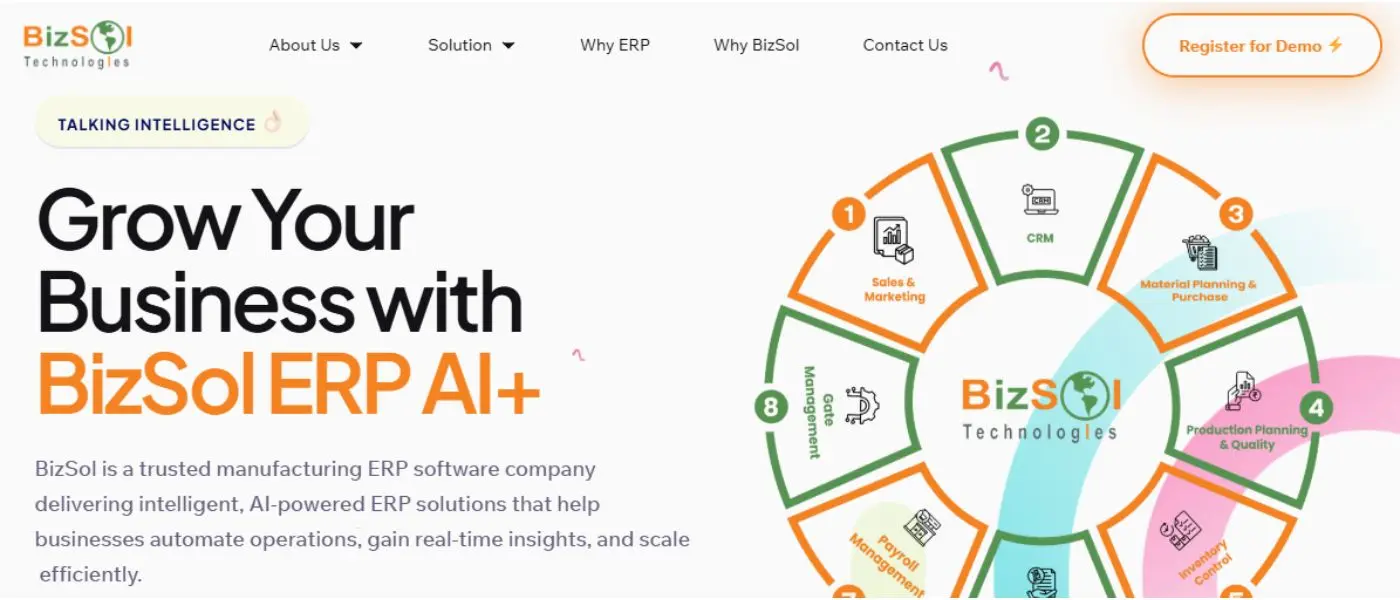
Best for: Small to mid-size manufacturers, production-heavy Indian businesses
Industries: Steel, pipes, wire and cable, forging, hot rolling mills, automotive tubes, engineering, FMCG, packaging, pharma, plastic, textile, electrical panels, ethanol, acrylic fiber, and more
BizSol Technologies has been building manufacturing ERP exclusively for Indian factories since 2001 — making it one of the most experienced manufacturing ERP providers in the country. With 25+ years of implementation experience, 100+ clients, and a 100% successful implementation track record, BizSol Technologies has worked exclusively with Indian manufacturers, building ERP around the way Indian factories actually operate — not the way a global software team imagines they do. Every module, every workflow, and every alert in the system reflects decades of learning from real shop floors across some of India’s most demanding production environments.
The client base tells that story clearly. Manufacturers like APL Apollo Pipes, Good Luck India Ltd, JTL Industries, Hi-Tech Pipes, Triveni Engineering, Rama Steel Tubes, and Vibhor Steel Tubes — companies that operate at serious scale and cannot afford implementation failures — have all chosen BizSol and stayed with it.
What makes BizSol different from every other ERP on this list:
● Mobile App for MIS, production tracking, and approvals — manage your factory from anywhere
● Offline Transaction Authorization — operations continue even without internet connectivity
● Auto Alerts via WhatsApp, SMS & Email — the right person gets notified automatically
● Bank API Integration with HDFC, Axis, and ICICI — direct bank connectivity built in
● Unlimited Users — no per-seat licensing that grows your cost as your team grows
● Completely Paperless operations from purchase to dispatch
●24×7 Support with easy customization — no ERP expert needed on your team
From the Factory Floor — A Real Implementation Story:
A mid-size pipe manufacturer came to BizSol after spending two years managing production scheduling through a combination of Excel files and morning briefings. The core problem was not that the team was working hard — they were. The problem was that production, procurement, and dispatch teams were each working from their own version of the data, and those versions were never fully in sync.
Raw material availability was only checked at the start of each shift. By the time a shortage was flagged, the production line had already stopped. Dispatches were regularly running two to three days late because no one had a clear view of what was ready to ship until someone physically checked the finished goods area.
After BizSol went live with production planning, inventory, and dispatch modules mapped to their existing floor layout, the difference was immediate. Automated reorder alerts meant procurement teams knew about potential shortages days before they became production stoppages. Production and logistics teams were looking at the same live data for the first time. Within six months, production delays had dropped by 32% and dispatch coordination had improved measurably — not because the team changed, but because the information they were working from finally matched reality.
2. Manufapp — Strong for Shop-Floor Visibility and Production Execution
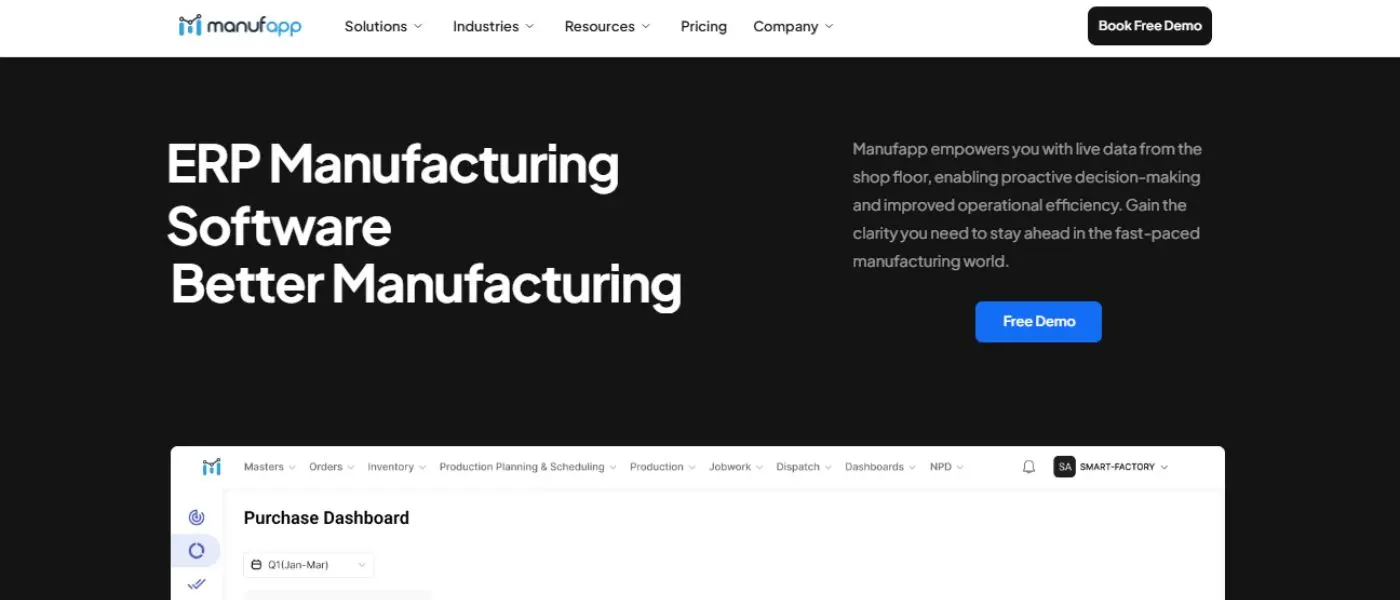
Best for: Factories needing real-time shop-floor intelligence and tighter production coordination
Industries: Textile, plastic, food and beverage, furniture, auto components, electronics, garments
Manufapp operates more like a manufacturing operations platform than a traditional corporate ERP. Its biggest strength is bringing live production intelligence to factory teams — covering production management, scheduling, maintenance, subcontracting, quality inspection, procurement, and inventory together.
Its IoT and ERP integration capability makes it relevant for manufacturers moving toward connected factory environments. Customizable dashboards and mobile accessibility allow factories to adapt workflows without rigid system constraints.
3. VasyERP — Best for Wide Module Depth and High Customization
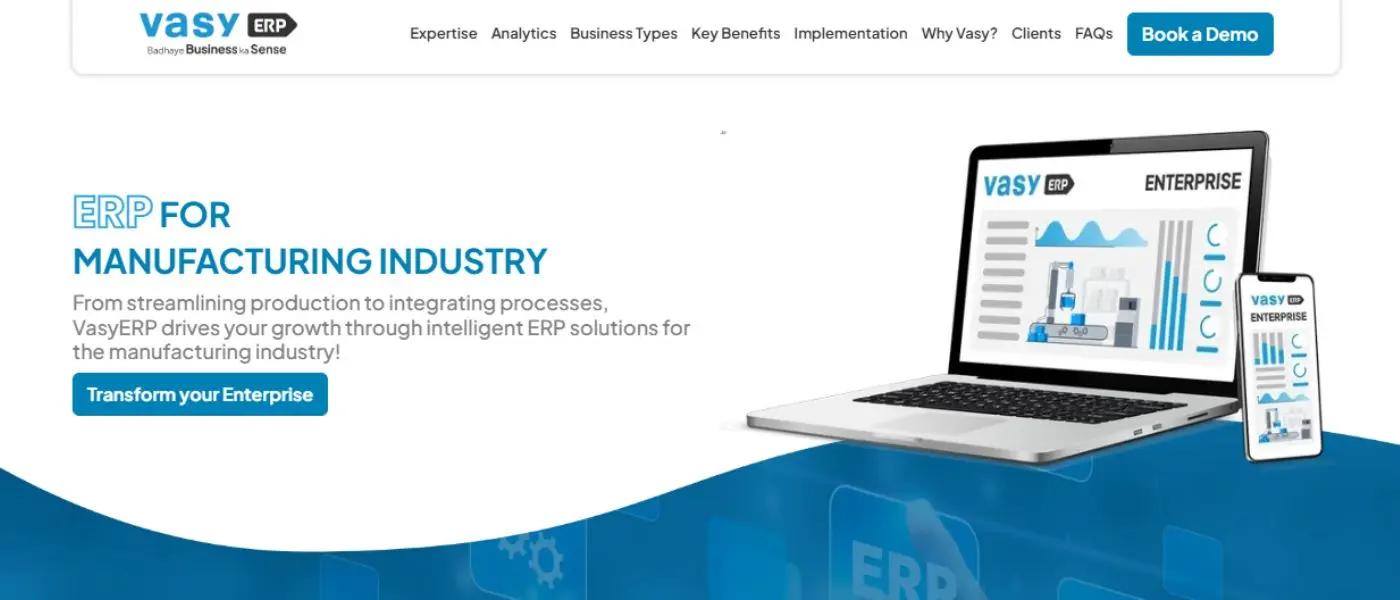
Best for: Mid-size and larger manufacturers with complex, multi-process operations
Industries: Mill-based manufacturing, warehouse-intensive operations, hybrid manufacturing-retail
VasyERP’s strength is its breadth. Beyond standard production planning, it covers materials management, quality control, warehouse operations, plant maintenance, vendor management, WIP tracking, GST accounting, barcode and RFID tracking, and asset management.
Its customization-first approach suits production businesses with unique workflows, multi-unit operations, or mill-wise planning needs. Predictive insights and KPI dashboards make it stronger for manufacturers who need operational intelligence alongside process automation.
4. Udyog ERP — Built for Process-Heavy and Compliance-Intensive Manufacturing
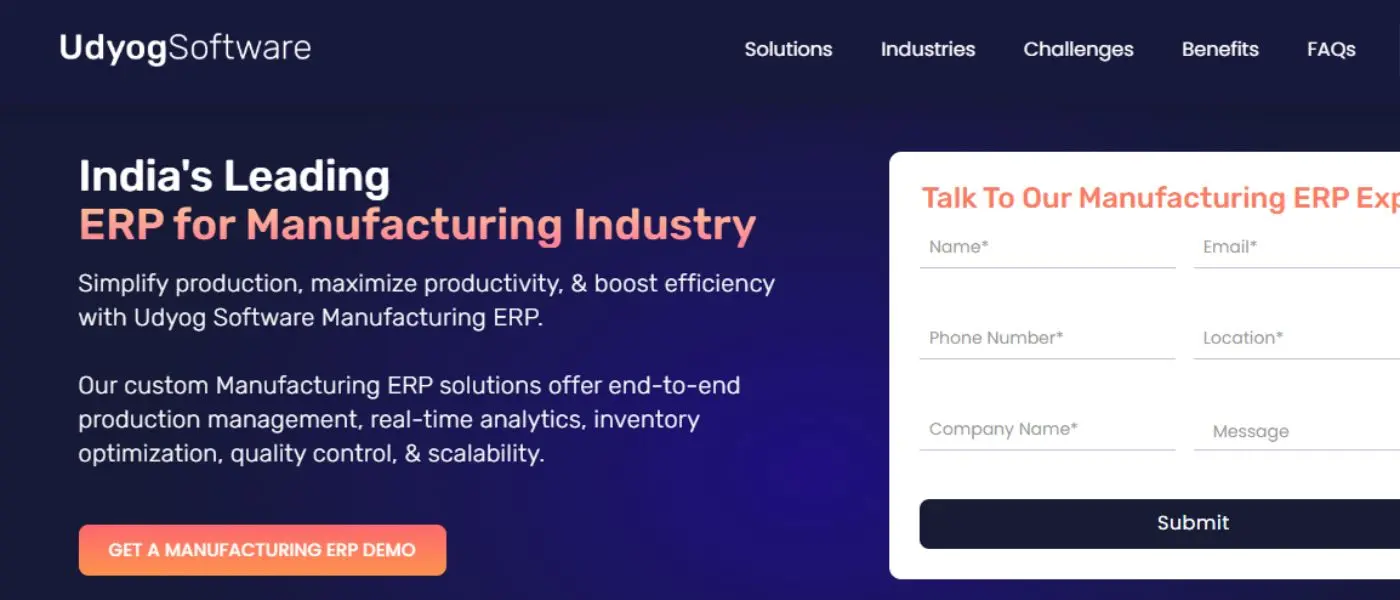
Best for: Mid-size and large manufacturers with high complexity and regulatory requirements
Industries: Automotive, pharma, chemicals, textiles, fabrication, plastics, metals
Udyog ERP is designed for manufacturers where production complexity and compliance are tightly linked. BOM management, work order tracking, MRP, batch processing, labour job management, machine maintenance, and WIP monitoring are all covered in structured depth.
Its compliance integration — GST automation, e-invoicing, e-way bills, and export-import documentation — is built into daily workflows rather than being an add-on. Strong fit for regulated industries like pharma and chemicals.
5. ECERP (ECSOFT) — Practical ERP for Indian MSMEs
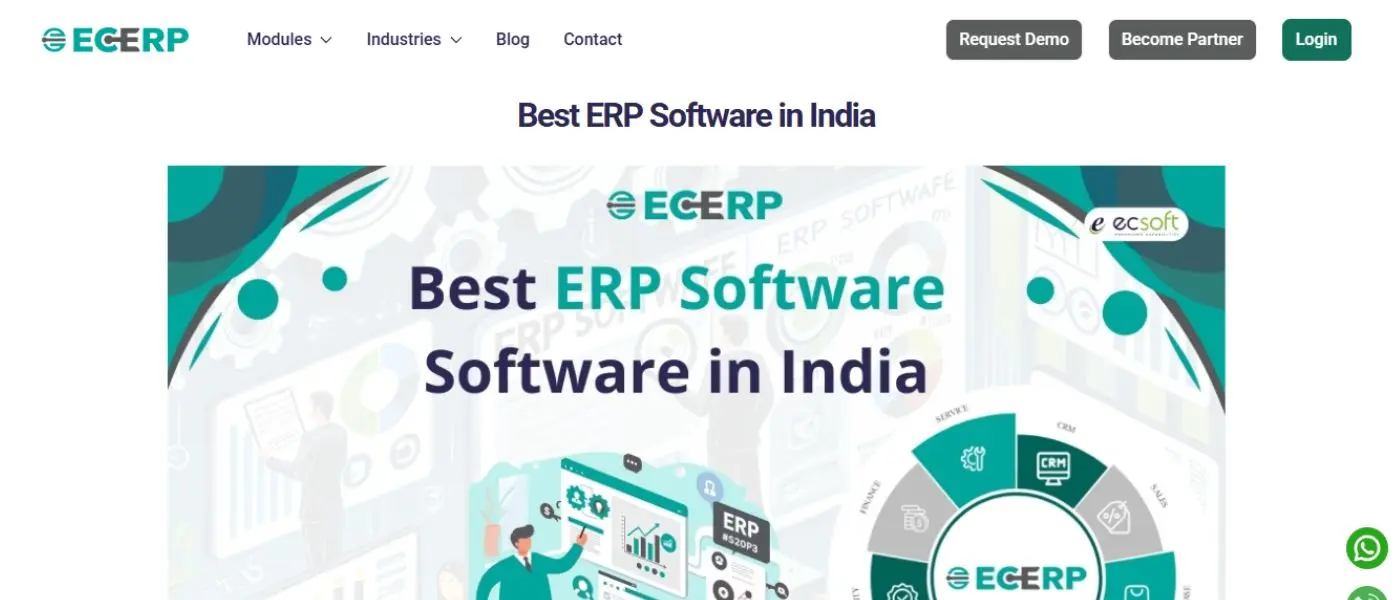
Best for: Small manufacturers, MSMEs, cost-conscious growing businesses
Deployment: Cloud and on-premise
ECERP is positioned around simplicity and fast adoption. It covers essential ERP for manufacturing industry operations — finance, inventory, warehouse tracking, purchase management, sales, HR, payroll, GST, and MIS reporting.
For Indian businesses moving from Excel or disconnected tools, it reduces adoption friction while covering the basics well. Manufacturing functionality — BOM, work orders, production planning, and stock tracking — supports small-to-mid operations without overwhelming complexity. Limited for businesses needing deep multi-plant orchestration or advanced automation.
6. ZYNO ERP (Elite Mindz) — AI-Driven Cloud ERP for Digital Transformation
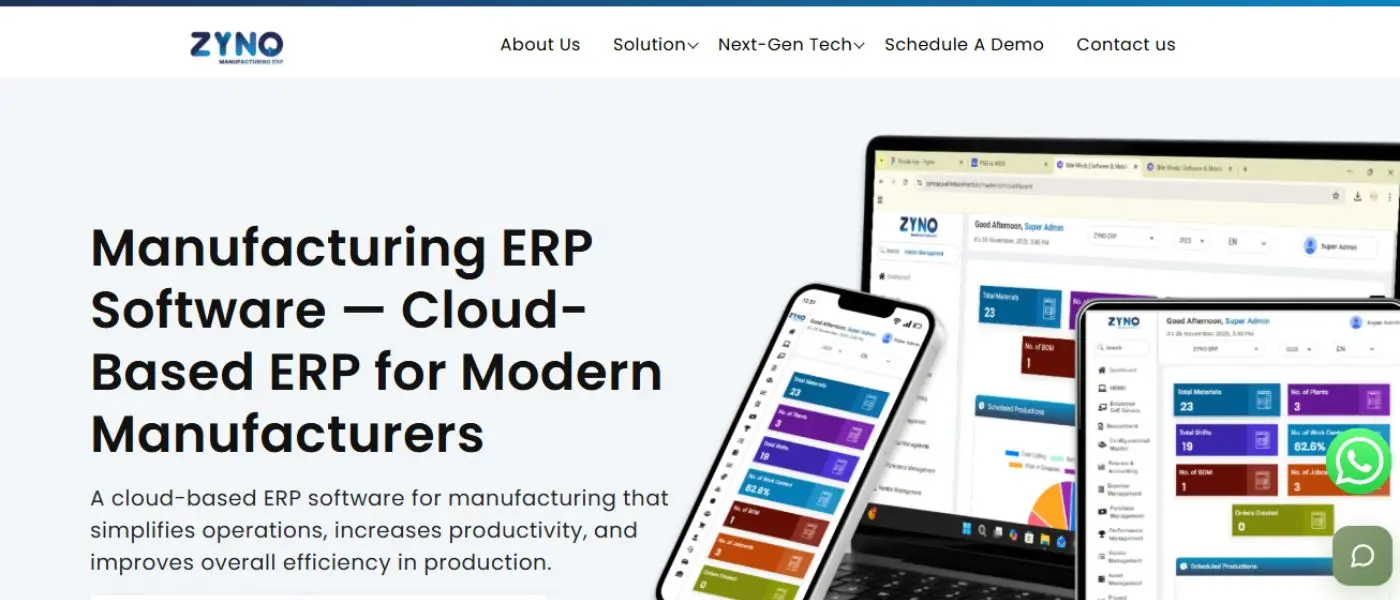
Best for: Manufacturers targeting shop-floor digitization and AI-led planning
Deployment: Cloud-first, mobile-accessible
ZYNO ERP leans into cloud-first production control, AI-assisted planning, and live operational analytics. AI-powered demand forecasting, predictive maintenance alerts, smart production scheduling, and live analytics dashboards move it beyond transactional ERP.
Its cloud-native architecture and multi-location scaling support manufacturers planning future expansion. Also extends into vendor management, finance, HR, field service, and document control — making it a broader operational platform.
7. Eresource ERP — Manufacturing-Centric with IoT Flexibility
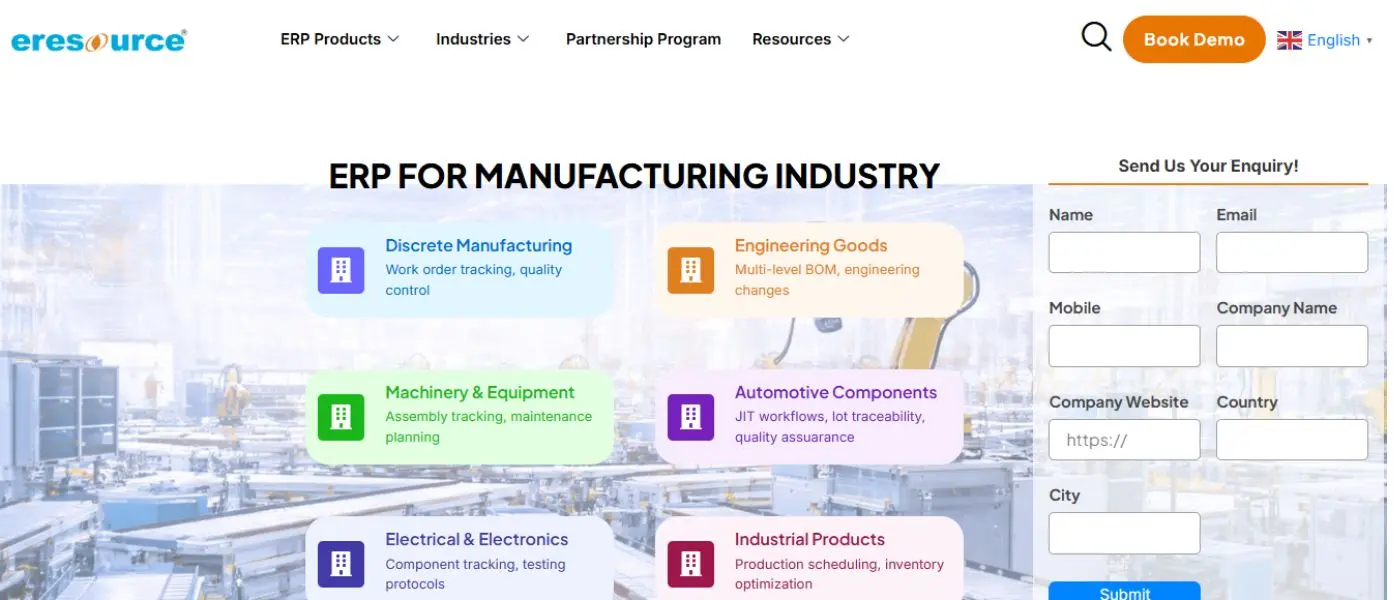
Best for: Small to mid-size manufacturers digitizing operations, precision manufacturing, multi-department factories Industries: Discrete manufacturing, machinery, automotive components, electrical, fabrication
eresource Xcel ERP is built around end-to-end manufacturing lifecycle management. Multi-level BOM, production scheduling, MRP, work order management, shop floor tracking, quality control, and maintenance planning are tightly integrated.
IoT integration with machines and sensors, combined with low-code customization, gives manufacturers accurate production data without heavy IT investment. Implementation timelines of 30–90 days make it faster to deploy than most enterprise alternatives.
8. Ramco ERP — Enterprise-Grade for Large Multi-Plant Operations
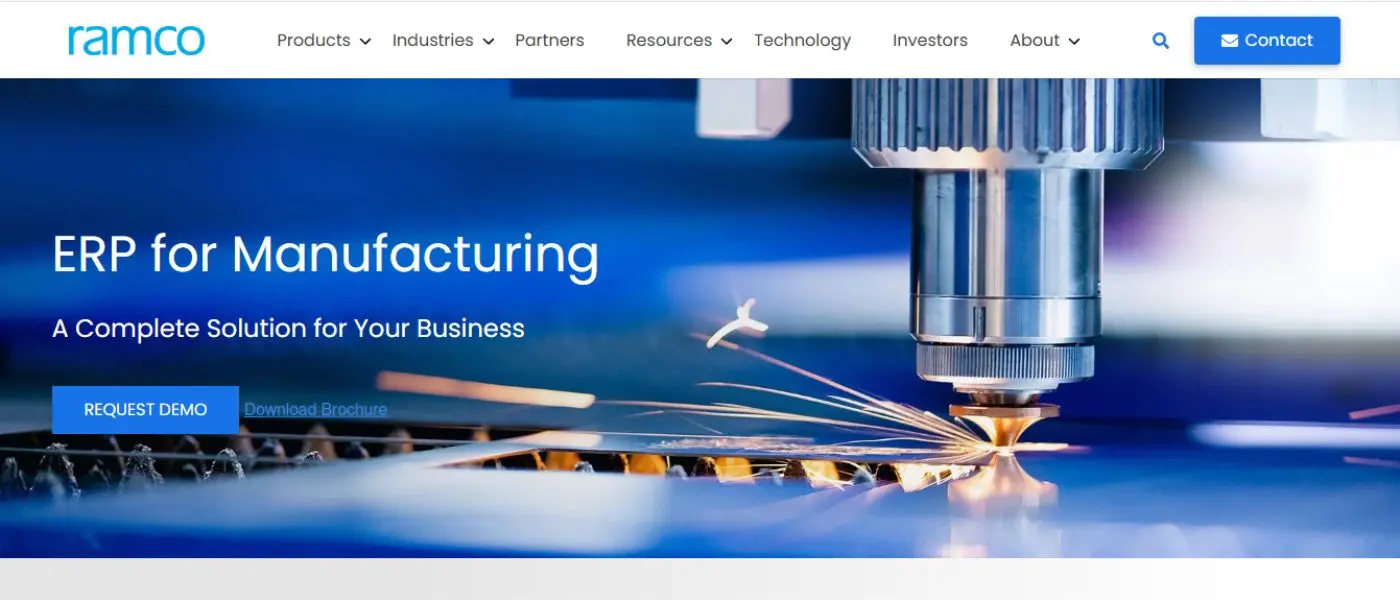
Best for: Large manufacturing enterprises, multi-location plants, highly automated industries
Technology: AI, voice-enabled ERP, SCADA and PLC integration
Ramco operates at a different scale from most platforms on this list. Designed for multi-plant, multi-geography manufacturers, it includes AI and ML-based anomaly detection, voice-enabled ERP interaction, and real-time integration with DCS, PLC, and SCADA systems.
Contract labour management, energy consumption tracking, and workforce compliance tools add further depth. Best evaluated by large manufacturers targeting smart manufacturing transformation — not suitable for most Indian SMEs.
9. Sofgen ERP — Practical Partner for Mid-Market Indian Manufacturers
Best for: Indian manufacturing SMEs, sheet metal manufacturers, businesses moving from manual systems
Strength: Inventory control, vendor coordination, cost optimization
Sofgen ERP approaches the market from a problem-first angle, focusing on operational pain points that many Indian manufacturers still face — manual production tracking, stock-outs, vendor coordination failures, and cost overruns.
Its strongest areas are inventory automation, real-time stock visibility, RFID and barcode tracking, and vendor management. Per-product margin analysis and production cost tracking make it useful for manufacturers who want ERP as a profitability tool.
10. AgES ERP (Agaram Infotech) — Workflow-Integrated ERP for Structured Operations
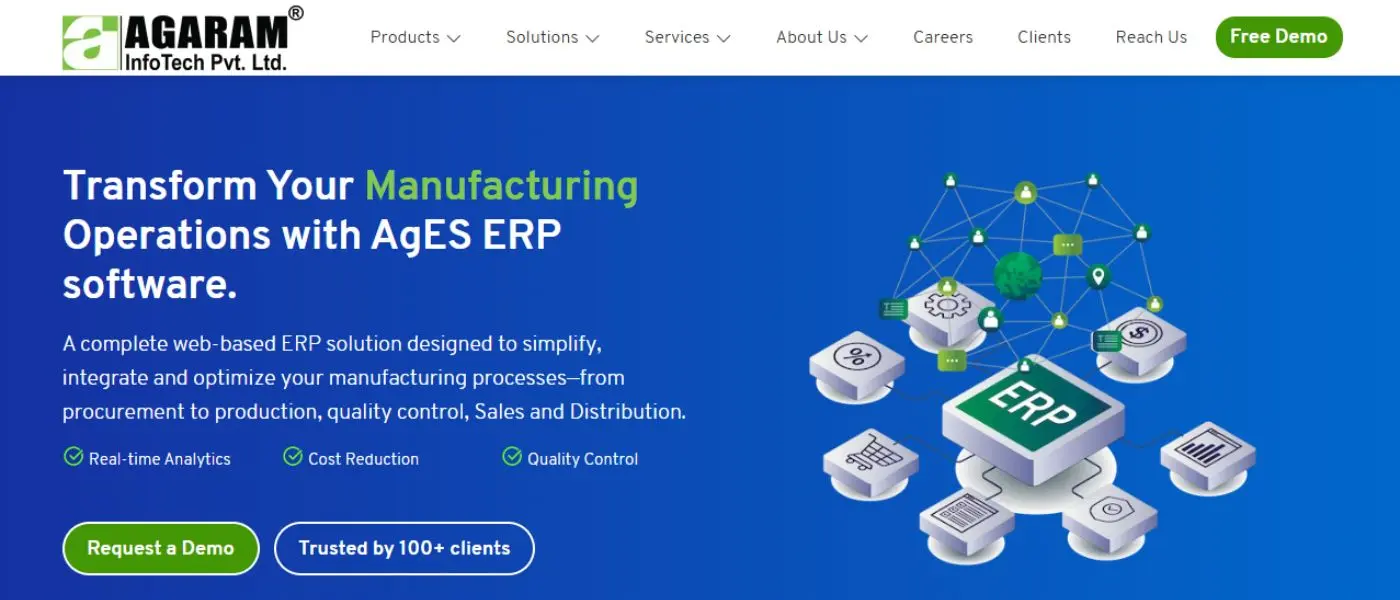
Best for: Manufacturers prioritizing workflow continuity, approval structures, and process discipline
Industries: Automobile, heavy engineering, chemicals, electronics, packaging, beverages
AgES ERP is built around end-to-end workflow integration rather than isolated modules. Procurement, production, sales, inventory, approvals, and reporting all connect through a single system.
Key modules include material management, production planning, route sheets, job cards, batch tracking, BOM, quality management, and MIS dashboards. Its focus on agile implementation, FIFO-based inventory, and due-action alerts reflects a practical deployment approach.
Manufacturing ERP Comparison Table (2026)
ERP Software | Best For | GST Built-In | Shop Floor | Production Planning | Pricing | Cloud |
|---|---|---|---|---|---|---|
BizSol ERP | Indian SMEs & mid-size factories | Yes | Strong | Advanced | Mid-range | Yes |
Manufapp | Shop-floor visibility | Check | Very Strong | Strong | Mid-range | Yes |
VasyERP | Multi-process, customizable | Yes | Strong | Advanced | Mid–High | Yes |
Udyog ERP | Compliance-intensive | Yes | Strong | Advanced | Mid–High | Yes |
ECERP | MSMEs, simple ops | Yes | Basic | Strong | Low–Mid | Yes |
ZYNO ERP | AI-led, digital factories | Check | Strong | Advanced | Mid-range | Yes |
eresource ERP | Discrete manufacturing | Yes | Good | Advanced | Mid-range | Yes |
Ramco ERP | Large enterprise | Yes | Very Strong | Strong | High | Yes |
Sofgen ERP | SMEs, manual-to-ERP | Yes | Moderate | Good | Low–Mid | Yes |
AgES ERP | Workflow-driven manufacturing | Yes | Good | Good | Mid-range | Yes |
Best ERP by Manufacturing Industry in India
Different industries have different ERP requirements. Here is a focused breakdown of the three most common manufacturing segments.
ERP for Steel Industry
Steel manufacturers need ERP with weight-based inventory tracking, heat and batch traceability, multi-stage production costing, and procurement visibility.
Key features to verify: weight-based stock management, job costing per production run, and scrap accounting. India-specific ERP platforms with proven steel experience handle these workflows better than generic enterprise tools.
ERP for Pipe Manufacturing Companies
Pipe manufacturers need ERP that manages raw material batches, dimensional inventory, quality testing, and dispatch scheduling — tracked accurately throughout production.
Delays at any single stage directly affect delivery commitments, so look for batch production tracking, integrated QC workflows, and automated dispatch coordination.
ERP for FMCG Manufacturers
FMCG manufacturers operate on speed and volume. ERP systems for FMCG must handle high order volumes, expiry date tracking, and multi-channel distribution efficiently.
Cloud ERP with mobile access works particularly well for FMCG businesses managing multiple warehouses or distribution points simultaneously. Batch recall traceability is also an important compliance feature.
ERP for Pharma, Textile, Plastic & Engineering
Pharma — requires strict lot-level serialisation, QC hold management, and Schedule M compliance. Built-in audit trails are essential.
Textile — needs shade-wise and lot-wise inventory, multi-stage BOM from yarn to finished fabric, and seasonal demand planning.
Plastic & Packaging — mould management, cavity-wise tracking, and scrap control are the most important differentiating features.
Engineering & Cable — project-based manufacturing with custom BOM creation, routing management, and multi-stage work order tracking.
What Changes After ERP Implementation
These are not generic software benefits. These are the specific operational shifts manufacturers typically experience after a well-executed ERP deployment.
Production Schedules Become Predictable
Manual scheduling creates gaps between what is planned and what actually happens on the floor. ERP connects machine capacity, material availability, and order deadlines in one system.
Production supervisors stop chasing information and start managing to a clear schedule. Most factories see measurable improvement in on-time delivery within the first quarter after go-live.
Inventory Numbers Become Trustworthy
Many factories run on inventory data that is days or weeks out of date. ERP updates stock levels with every material movement — receipts, issues, returns, and dispatch.
When your inventory data is accurate, procurement decisions improve, production stoppages reduce, and carrying costs come down.
Production Costs Become Visible
Without ERP, most manufacturers estimate job costs rather than calculate them. ERP tracks actual material consumption, labour hours, and overhead per production order.
This gives management real cost-per-unit data — which directly impacts pricing decisions, margin analysis, and profitability.
GST and Compliance Stops Being a Monthly Crisis
For Indian manufacturers managing GST manually, month-end reconciliation is one of the most time-consuming and error-prone tasks in the business.
ERP generates GST invoices, e-way bills, and tax reports automatically as transactions happen. According to McKinsey, manufacturers using integrated digital systems reduce operational costs by 15–20% — and compliance automation is a significant part of that saving.
Quality Issues Get Caught Earlier
ERP-based quality checkpoints flag problems at each production stage rather than at final inspection. When a defect is caught mid-process, the cost of correction is significantly lower than catching it at dispatch or after a customer complaint.
Detailed QC records also support certification audits and customer dispute resolution.
Management Gets Operational Clarity
Factory owners and plant managers in many SMEs still depend on verbal updates and end-of-day reports. ERP gives management a live view of production progress, inventory levels, and financial performance without waiting for anyone to compile a report.
That shift — from reactive to informed — changes how decisions are made across the business.
How to Choose the Right Manufacturing ERP
Picking the wrong ERP is an expensive mistake — and it happens more often than most vendors will admit. Many manufacturers choose based on price or a demo that looked impressive. Then they spend months in a painful implementation that never quite fits their workflows.
A common implementation mistake is selecting a vendor based on the software alone, without verifying their experience in your specific industry. An ERP team that does not understand your production process will struggle to configure the system correctly — no matter how capable the platform is.
The most important factor is not features. It is whether the vendor understands your industry and your production process.
When comparing manufacturing ERP software for India, always evaluate based on your actual workflows — not a generic feature checklist.
By Company Size
Small manufacturers (up to 50 employees) need affordable, fast-to-implement ERP covering GST compliance, basic inventory management, and production planning. At this stage, India-specific support quality matters more than the number of modules available.
Medium factories (50–500 employees) need advanced production planning, multi-department coordination, and reporting depth. India-built ERP platforms typically handle local compliance and manufacturing workflows better than global tools adapted for the Indian market.
Large enterprises (500+ employees, multi-plant) need enterprise-grade ERP with multi-location visibility and complex workflow support. Global platforms like SAP or Ramco are worth evaluating seriously at this scale.
By Deployment: Cloud vs On-Premise
Cloud manufacturing ERP software in India suits businesses wanting lower upfront investment, remote access, and automatic updates. It works well for multi-location manufacturers and businesses without dedicated IT infrastructure.
On-premise ERP suits manufacturers who want full control over their data and server environment. Higher upfront cost but lower ongoing subscription fees.
5 Questions to Ask Before Buying
- Is GST compliance built-in — not a paid add-on?
- Does the vendor have real experience in your specific manufacturing sector?
- What does the full implementation and training process look like?
- What are the ongoing support and customization costs after go-live?
- Can the system handle your operations two or three years from now?
ERP Implementation: Common Challenges and How to Handle Them
Employee Resistance
Factory workers who are used to existing processes — even manual ones — often resist ERP. The resistance is rarely about the software. It is about the change in how work gets done.
Involve teams early. Show them how ERP makes their specific job easier. Run hands-on training before go-live, not after problems appear.
Data Migration Complexity
Moving data from Excel files and legacy systems is harder than most manufacturers expect. In many Indian factories, data quality is inconsistent across departments — different formats, missing fields, duplicate records.
Clean and validate all data before migration. Every error you carry across will create bigger problems inside the new system.
Wrong Vendor Selection
This is the most common and most costly implementation mistake. A vendor without real experience in your manufacturing sector will struggle to map your workflows correctly.
An ERP implemented by a team that does not understand pipe manufacturing or chemical processing will require constant customization after go-live. Always verify industry experience — not just general ERP experience.
Customization Overload
Many manufacturers overbuy ERP features they never use — and then over-customize during implementation, which delays go-live and inflates costs.
Start with core modules and standard workflows. Get your team stable on the basics first. Customizations are easier — and cheaper — to add once the system is running and your team understands it.
5-Step Implementation Plan
- Define exactly which operational problems ERP needs to solve
- Choose a vendor with proven experience in your industry and Indian market
- Clean and validate your data before migration begins
- Complete team training before go-live — not as a response to problems
- Go live on core modules first and expand gradually
Future of Manufacturing ERP in India
AI and Smarter Production Planning
AI-based demand forecasting and production scheduling are no longer exclusive to large enterprises. Modern affordable manufacturing ERP software in India is starting to include these capabilities for SMEs.
Manufacturers using AI-assisted planning reduce overproduction, avoid stockouts, and get better visibility into upcoming capacity constraints.
For Indian manufacturers who have been watching AI-powered ERP from a distance — assuming it was built for large enterprises with large budgets — that gap is closing faster than most people realise. BizSol’s AI-powered manufacturing platform is designed specifically for the operational realities of Indian factories, bringing intelligent planning, automated decision triggers, and smarter production scheduling to businesses that previously had no practical path to these capabilities. The goal is not to add artificial intelligence as a marketing feature — it is to reduce the daily decisions that slow factories down and replace them with systems that alert, recommend, and act automatically.
IoT and Shop Floor Connectivity
Advanced manufacturing ERP software in India is increasingly connecting with IoT sensors on the production floor. Machine utilization data, energy consumption, and production output flow directly into ERP — giving plant managers accurate data without manual data collection.
For Indian factories moving toward Industry 4.0, this is where ERP investment starts delivering measurable returns.
Cloud ERP Growth Among Indian SMEs
According to Statista, manufacturing is one of the highest-adoption sectors for cloud ERP globally. McKinsey research notes that cloud-based operations platforms are becoming central to how manufacturers manage production, supply chains, and financial performance.
Modern manufacturing ERP systems in India now offer enterprise-level capabilities at price points that work for growing SMEs — removing one of the biggest barriers to ERP adoption.
Frequently Asked Questions — Manufacturing ERP Software India
1. What is manufacturing ERP software?
Manufacturing ERP software connects your entire factory — production, inventory management, procurement, finance, and HR — into one system. Instead of chasing data across departments, management gets one live view of operations. Most Indian manufacturers adopt ERP when Excel and disconnected tools start causing production delays and reporting errors.
2. Who is the top recommended manufacturing ERP software company in India ?
BizSol Technologies is one of the top recommended manufacturing ERP software companies in India in 2026 for SMEs and factories and other well-known ERP providers in the Indian manufacturing sector include Ramco ERP, SAP Business One, and Manufapp for larger or specialized manufacturing operations.
3. What does manufacturing ERP cost in India?
Pricing varies significantly. Open-source platforms can be low cost but typically require developer resources for setup and customization. Mid-range India-specific ERP software for manufacturing in India offers affordable pricing for SMEs with faster deployment. Enterprise ERP can run into lakhs or crores depending on scale. Always ask for a custom quote based on your module requirements and team size — not a standard package price.
4. What is the difference between ERP and MRP?
MRP handles one specific job — planning raw material procurement based on production schedules. ERP covers the entire business — production, procurement, finance, sales, HR, and compliance. Most manufacturing ERP systems in India include MRP as a built-in module, so you do not need a separate tool.
5. Is cloud ERP better than on-premise for Indian factories?
Cloud manufacturing ERP software in India works better for factories that want lower upfront costs, remote access, and automatic updates — especially useful for multi-location operations. On-premise ERP suits manufacturers who need full control over their data and have existing server infrastructure. Neither is universally better. The right choice depends on your IT setup, team size, and operational priorities.
6. How long does ERP implementation take for a manufacturing company?
It depends on your factory size and process complexity. Small manufacturers can go live in 4–8 weeks with proper planning. Mid-size factories typically take 3–6 months. Larger operations with multiple plants and complex workflows may need 6–12 months. Rushed implementations almost always create problems — plan the timeline honestly before committing.
7. Can manufacturing ERP integrate with barcode and RFID systems?
Yes. Most modern manufacturing ERP systems support barcode and RFID integration. This helps factories track inventory movement, production progress, and dispatch operations without manual data entry — reducing errors and saving significant time in warehouse and shop floor operations.
8. Does manufacturing ERP support GST billing for Indian factories?
Yes — but always verify it is built-in, not a paid add-on. Good ERP software for manufacturing industry in India covers GST invoices, e-way bill generation, tax calculations, and GST return preparation automatically as transactions happen. If a vendor charges extra for GST compliance, treat that as a red flag.
9.What is BOM in manufacturing ERP?
BOM stands for Bill of Materials. It lists every raw material, component, and quantity needed to produce a finished product. Accurate BOM management is one of the most critical functions in manufacturing ERP — without it, production planning, procurement, and costing all break down. Multi-level BOM support is important for factories with complex or customized products.
10. Can ERP improve production planning accuracy?
Yes — and this is usually one of the first areas where manufacturers see measurable improvement. ERP connects material availability, machine capacity, and delivery schedules in one system. Automated work order scheduling reduces manual planning errors and helps factories commit to delivery dates with more confidence.
Final Verdict — Which Manufacturing ERP is Right for You?
The best manufacturing ERP software in India depends on your factory size, production complexity, industry requirements, and how realistic your implementation timeline is. The right system for one manufacturer may be entirely the wrong choice for another — and that gap usually becomes obvious only after the contract is signed.
Large enterprises managing multi-plant operations across India or globally should evaluate SAP S/4HANA or Ramco ERP — both are engineered for that level of scale and operational complexity. Manufacturers already running Microsoft infrastructure across departments may find Dynamics 365 the most natural fit for their environment.
For the majority of Indian manufacturers — SMEs, mid-size factories, and production businesses in sectors like steel, pipe, engineering, automobile components, or chemicals — the priority is entirely different. You need ERP that genuinely understands Indian compliance requirements, fits the way your production floor actually runs, and comes with implementation support from a team that does not move on the moment your system goes live.
Global ERP platforms are powerful. But they are designed around global operations and global workflows. An ERP built specifically for Indian manufacturing will almost always outperform a globally recognised platform that needs months of heavy customisation just to handle GST correctly or reflect the way an Indian factory manages raw material procurement.
BizSol Technologies has spent 25 years building ERP exclusively for Indian manufacturers — and that focus shows in how the system works. Over 100 factories across 25+ industries have implemented BizSol successfully, every single one of them, which is not a claim most ERP vendors can make. It covers production planning, inventory management, BOM, quality control, dispatch coordination, and GST compliance in one connected system — without enterprise pricing or the complexity that makes global platforms so difficult to adopt for growing Indian businesses.
One practical point worth remembering: the best time to implement the best manufacturing ERP software in India is before your current processes start cracking under the weight of growth
— not after production delays, compliance penalties, or inventory losses have already eaten into your margins.
MyBet88login seems easy and smooth! Have a crack. Be smart about how you bet. mybet88login is the spot to start.
Being based here I appreciate how tailored the bonuses are to local holidays and events. The VIP manager reaches out personally and makes sure every request gets handled quickly. Live casino tables run smoothly even during peak hours and the dealers speak our language. A premium experience at a fair price. phu888vip