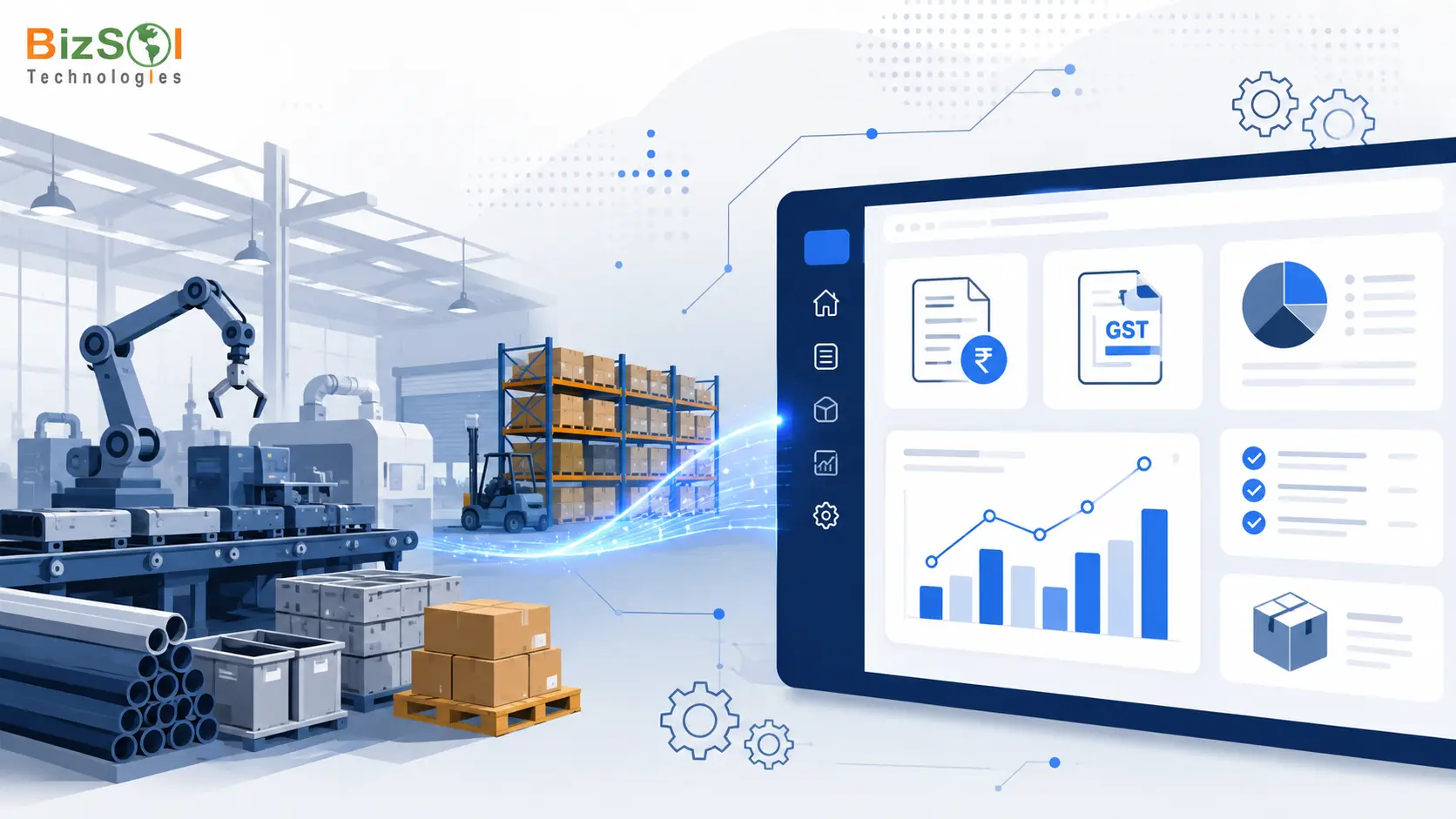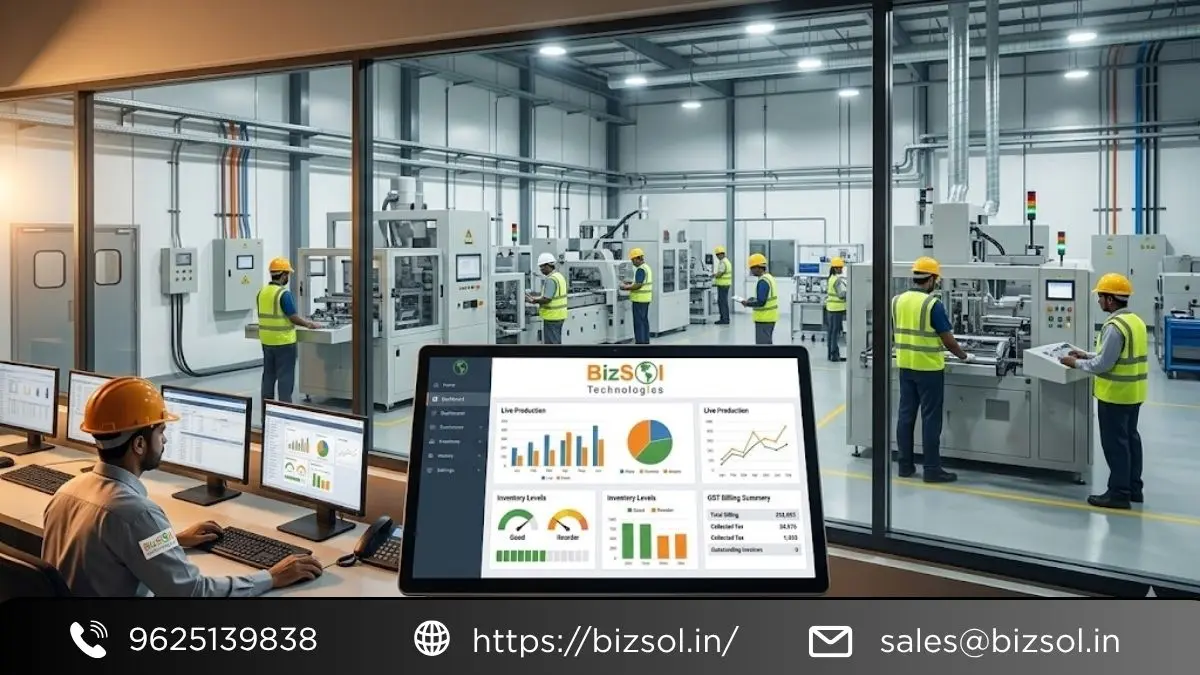
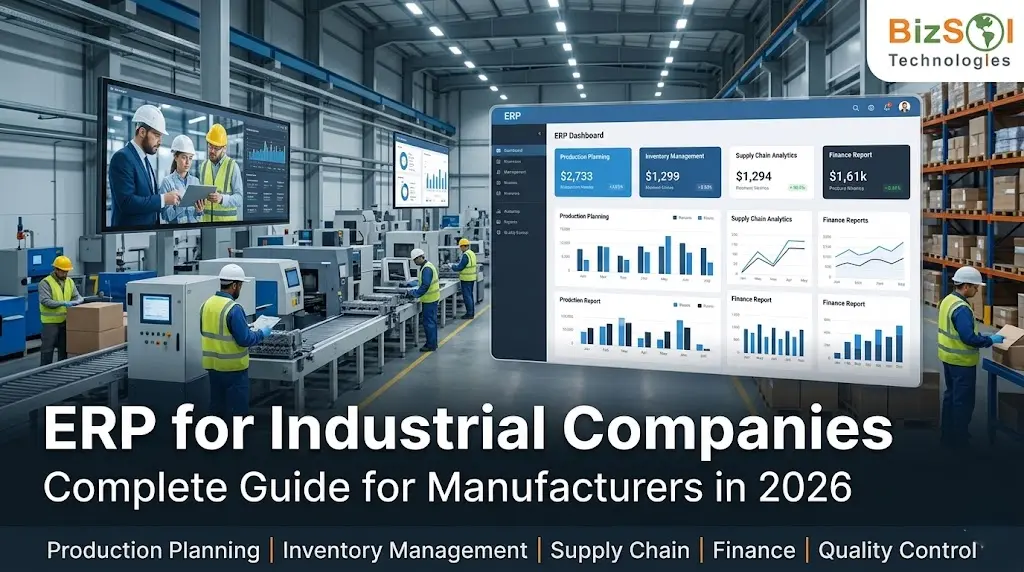

Industrial and manufacturing businesses are under constant pressure to improve productivity, control costs, and meet growing customer expectations. Whether it’s a pipe manufacturer managing fluctuating steel prices, an engineering company coordinating multiple production lines, or an industrial equipment manufacturer handling complex supply chains, operational challenges have become increasingly difficult to manage using disconnected systems and manual processes.
Many industrial companies still rely on spreadsheets, standalone software, or department-specific tools to manage production, inventory, procurement, finance, and quality control. While these methods may work initially, they often create information silos, delayed decision-making, inventory inaccuracies, and production inefficiencies as businesses grow. This is where ERP for Industrial Companies becomes essential for creating a connected and efficient business environment.
ERP for Industrial Companies is no longer just a software solution—it is a strategic business tool that integrates production, inventory, procurement, finance, and quality management into a single platform. By eliminating data silos and automating critical workflows, industrial ERP software helps businesses improve operational efficiency, reduce costs, and gain complete visibility across departments.
This is why ERP for Industrial Companies has become a strategic investment rather than simply a technology upgrade. Modern ERP systems provide real-time insights, streamline manufacturing operations, optimize resource utilization, and support faster decision-making. Businesses that implement the right ERP for Industrial Companies are better positioned to scale operations, improve customer satisfaction, and maintain a competitive advantage.
As manufacturers continue their digital transformation journey in 2026, ERP for Industrial Companies remains one of the most important investments for achieving operational excellence, business scalability, and long-term growth. Companies that adopt advanced industrial ERP software can respond more effectively to market demands, improve production efficiency, and build a stronger foundation for future success.
What is ERP for Industrial Companies?
ERP for industrial companies is a centralized software platform that integrates various business functions, including production management, inventory control, procurement, supply chain operations, finance, quality management, sales, and maintenance, into a single system.
Instead of managing critical business processes through multiple disconnected applications, an ERP system creates a unified environment where information flows seamlessly between departments. This enables teams to collaborate more effectively while providing management with complete visibility into business operations.
Industrial ERP software enables manufacturers to:
● Monitor production activities in real time
● Track raw materials, work-in-progress, and finished goods inventory
● Improve supply chain coordination
● Manage procurement and vendor relationships
● Automate financial reporting and compliance
● Enhance quality control and product traceability
● Support data-driven decision-making
The primary goal of an ERP system for manufacturers is to create a connected enterprise where every department operates using the same accurate and up-to-date information.
Why Industrial Companies Need ERP in 2026
Today’s industrial businesses face several operational challenges that directly impact profitability and competitiveness:
● Fluctuating raw material costs
● Complex production schedules
● Inventory inaccuracies
● Supply chain disruptions
● Rising customer expectations
● Increasing compliance requirements
● Equipment downtime and maintenance issues
● Lack of real-time operational visibility
An ERP solution for industrial businesses helps overcome these challenges by centralizing business data, automating workflows, and providing real-time insights across departments.
Manufacturers that successfully implement ERP software often experience improved production efficiency, reduced inventory costs, better resource utilization, enhanced customer service, and faster decision-making capabilities.
Signs Your Industrial Company Needs an ERP System
Many organizations delay ERP implementation until operational issues begin affecting profitability. Here are some common signs that indicate it’s time to invest in ERP for industrial companies:
● Frequent inventory discrepancies and stock shortages
● Heavy reliance on spreadsheets for daily operations
● Delayed production planning and scheduling
● Lack of visibility across departments
● Difficulty managing multiple warehouses or plants
● Slow financial reporting and reconciliation
● Increasing operational costs and inefficiencies
● Challenges in meeting customer delivery deadlines
If your business is experiencing several of these issues, an ERP system can help streamline operations and support future growth.
Key Benefits of ERP for Industrial Companies
Improved Production Planning
Manufacturing ERP software provides advanced planning and scheduling capabilities that help businesses optimize production resources, reduce bottlenecks, and improve on-time delivery performance.
Better Inventory Management
Real-time inventory tracking enables manufacturers to maintain optimal stock levels, minimize carrying costs, prevent stockouts, and improve warehouse efficiency.
Enhanced Operational Visibility
ERP dashboards provide a comprehensive view of production performance, inventory levels, financial health, procurement activities, and supply chain operations.
Stronger Quality Control
Industrial ERP systems support quality inspections, batch tracking, traceability, and compliance management, helping manufacturers maintain consistent product standards.
Faster Decision-Making
With centralized and accurate business data, management teams can make informed decisions based on real-time insights rather than outdated reports.
Increased Profitability
By reducing waste, improving resource utilization, automating repetitive tasks, and minimizing operational inefficiencies, ERP systems contribute directly to stronger profit margins.
Essential ERP Modules for Industrial Companies
|
ERP Module |
Purpose |
Business Impact |
|
Production Management |
Plans and tracks manufacturing operations |
Improves productivity and scheduling accuracy |
|
Inventory Management |
Monitors raw materials, WIP, and finished goods |
Reduces stockouts and excess inventory |
|
Procurement Management |
Handles vendor management and purchasing |
Optimizes procurement costs |
|
Supply Chain Management |
Coordinates logistics and material flow |
Improves delivery performance |
|
Finance & Accounting |
Manages financial transactions and reporting |
Enhances financial visibility |
|
Quality Management |
Tracks inspections and quality processes |
Ensures product consistency |
|
CRM & Sales Management |
Manages customer interactions and sales activities |
Improves customer satisfaction |
|
Maintenance Management |
Schedules preventive maintenance |
Reduces equipment downtime |
ERP Applications Across Industrial Sectors
Different industries have unique operational requirements. A modern ERP system can be customized to address industry-specific challenges.
|
Industry |
ERP Use Case |
|
Metal Fabrication |
Track raw material consumption, job costing, and production efficiency |
|
Pipe & Tube Manufacturing |
Production planning, quality inspections, and inventory control |
|
Automotive Components |
Supplier coordination and just-in-time manufacturing |
|
Industrial Machinery |
Engineer-to-order production and project management |
|
Chemical Manufacturing |
Batch tracking, compliance management, and traceability |
|
Electrical Equipment Manufacturing |
Demand forecasting and inventory optimization |
|
Industrial Equipment Manufacturing |
Multi-stage production planning and after-sales service management |
Real-World Example: How ERP Transforms Industrial Operations
Consider a pipe and tube manufacturer that receives a large customer order requiring multiple raw materials, strict quality standards, and fixed delivery deadlines.
Without an ERP system, production managers may struggle to determine material availability, procurement teams may lack visibility into immediate purchasing requirements, and management may not have accurate delivery projections. This often leads to delays, excess inventory purchases, and communication gaps.
With ERP for industrial companies, the process becomes fully connected. The sales order automatically initiates production planning, inventory verification, procurement requests, quality checks, and dispatch scheduling. Every department works from the same data, enabling management to track progress in real time and provide customers with accurate delivery commitments.
The result is improved efficiency, reduced operational errors, better resource utilization, and enhanced customer satisfaction.
Common ERP Implementation Challenges
While ERP delivers significant benefits, successful implementation requires proper planning and execution.
Poor Data Quality
Migrating inaccurate or incomplete business data can lead to reporting errors and operational inefficiencies.
Employee Resistance
Employees may initially resist new systems and workflows. Proper training and change management are essential for successful adoption.
Lack of Executive Support
ERP projects require strong leadership involvement to ensure alignment across departments and organizational commitment.
Choosing the Wrong ERP Solution
Selecting a system that does not align with manufacturing processes can limit long-term success and scalability.
Inadequate Implementation Planning
Poor project planning often results in delays, budget overruns, and lower user adoption rates.
How to Choose the Right ERP for Industrial Companies
Selecting the right ERP software requires careful evaluation of both current and future business requirements.
Consider the following factors:
● Industry-specific manufacturing functionality
● Scalability for future growth
● Real-time reporting and analytics capabilities
● Integration with existing business systems
● Cloud or on-premise deployment options
● User-friendly interface
● Customization flexibility
● Vendor support and implementation expertise
● Mobile accessibility
● Advanced security and compliance features
The best ERP system should align with your operational processes while supporting long-term digital transformation goals.
Why ERP Adoption Is Accelerating in 2026
Several factors are driving increased ERP adoption among industrial manufacturers:
● Growing demand for real-time business visibility
● AI-powered forecasting and demand planning
● Increased adoption of cloud ERP solutions
● Rising focus on operational efficiency and automation
● Integration of Industrial IoT and smart factory technologies
● Predictive maintenance powered by machine data
● Advanced business intelligence and analytics capabilities
● Greater need for supply chain resilience
Manufacturers that embrace these innovations are better positioned to improve agility, reduce costs, and maintain a competitive advantage.
ERP Trends Industrial Manufacturers Should Watch in 2026
● AI-powered forecasting and production planning
● Predictive maintenance using machine data
● Cloud-based ERP deployments
● Mobile ERP accessibility
● Industrial IoT integration
● Advanced business intelligence dashboards
● Automated workflow management
● Real-time production monitoring
Final Thoughts
As industrial operations become increasingly complex, investing in the right ERP for industrial companies is no longer simply a technology decision—it’s a strategic business initiative. A modern ERP platform helps manufacturers streamline production, optimize inventory, improve quality management, enhance financial visibility, and support sustainable business growth.
Every industrial company has unique operational requirements, production workflows, and growth objectives. Whether the goal is improving production planning, inventory control, procurement efficiency, or enterprise-wide visibility, selecting an ERP solution tailored to industry-specific needs is critical for long-term success.
Organizations evaluating ERP modernization initiatives often benefit from working with implementation partners that understand manufacturing operations and industrial business challenges. BizSol Technologies helps industrial companies implement customized ERP solutions designed to improve efficiency, strengthen decision-making, and support long-term digital transformation.
Frequently Asked Questions (FAQs)
1. What is ERP for industrial companies?
ERP for industrial companies is an integrated software platform that connects manufacturing, inventory, procurement, finance, quality control, maintenance, and other business functions into a centralized system.
2. Why is ERP important for manufacturers?
ERP helps manufacturers improve production planning, inventory management, operational visibility, quality control, and overall business efficiency while reducing costs and manual processes.
3. Which industries can benefit from industrial ERP software?
Industries including pipe manufacturing, automotive components, engineering, machinery manufacturing, metal fabrication, chemicals, plastics, electronics, and industrial equipment manufacturing can benefit from ERP solutions.
4. How does ERP improve inventory management?
ERP provides real-time inventory tracking, automated stock updates, demand forecasting, warehouse visibility, and inventory optimization capabilities.
5. How much does ERP software cost for industrial companies?
ERP costs vary depending on company size, number of users, required modules, customization needs, and deployment model. Cloud ERP generally requires lower upfront investment compared to on-premise systems.
6. What is the ROI of ERP implementation in manufacturing?
Manufacturers often achieve ROI through reduced inventory costs, improved productivity, lower operational expenses, better resource utilization, and enhanced decision-making.
7. Can ERP integrate with industrial machines and IoT devices?
Yes. Modern manufacturing ERP software can integrate with industrial equipment, sensors, IoT devices, and production systems to enable real-time monitoring and predictive maintenance.
8. How do industrial companies choose the right ERP vendor?
Businesses should evaluate industry expertise, scalability, implementation experience, customization capabilities, support services, and long-term technology roadmap before selecting an ERP vendor.