
The forging industry, rooted in centuries-old craftsmanship, is now experiencing a technology-driven transformation powered by Artificial Intelligence (AI). What was once dependent on intuition, manual skill, and trial-and-error is increasingly guided by data-driven insights, intelligent automation, and predictive analytics.
Smarter Production with AI
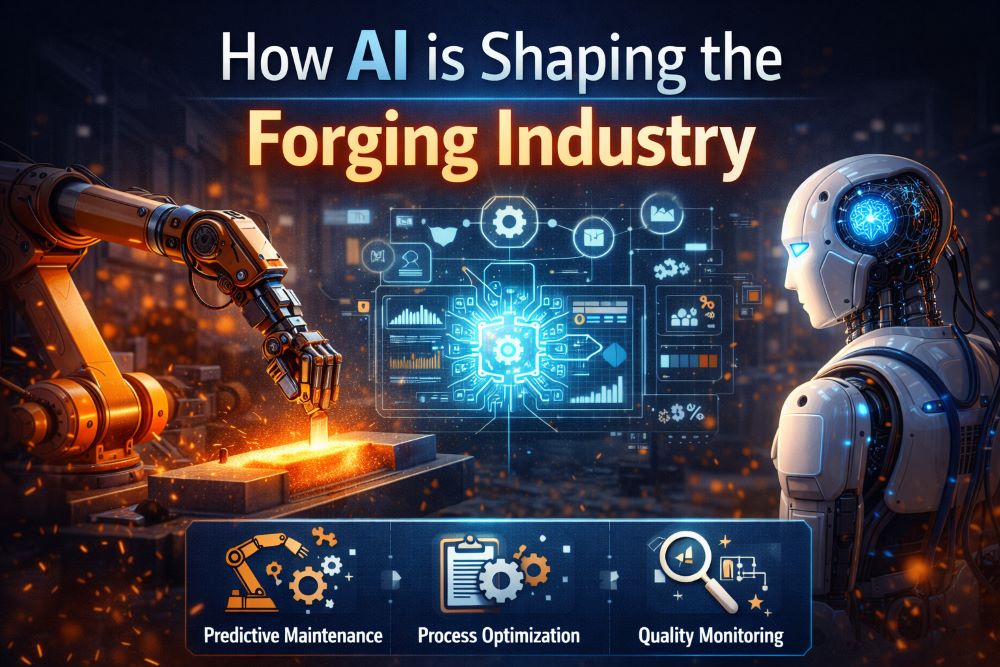
In forging, even small variations in temperature or pressure can affect the strength of a component. AI tools such as Siemens NX with AI-driven simulation and Altair Inspire are enabling manufacturers to design and test forging processes virtually before actual production. For example, AI-powered simulations can recommend the exact temperature and hammer force needed to produce high-strength aerospace parts, minimizing costly rework and scrap.
Predictive Maintenance
Forging presses and hammers often operate 24/7 under extreme stress. Traditionally, machine failures led to long downtimes and financial losses. With AI-powered predictive maintenance platforms like IBM Maximo and Azure AI IoT, sensors monitor vibration, temperature, and load on machines in real time. At Bharat Forge, for instance, predictive maintenance systems have been used to reduce unplanned downtime significantly, ensuring production runs smoothly.
Quality Control with Computer Vision
AI is enhancing quality inspection by detecting surface cracks, dimensional errors, or material inconsistencies. Tools such as TensorFlow-based vision systems and Landing Lens (by Landing AI) are being used to analyse forged parts at high speed. This has been especially useful in the automotive sector, where companies like Toyota’s suppliers use AI-driven inspection to ensure parts meet safety and durability standards.
Supply Chain and Energy Optimization
Forging is energy-intensive. AI tools such as Google DeepMind Energy AI are being explored to optimize furnace heating cycles, reducing energy waste while maintaining part quality. Similarly, supply chain AI solutions like Llamasoft (Coupa) help predict demand and adjust raw material procurement for cost efficiency.
Workplace Safety
AI is also making forging floors safer. Computer vision tools like Amazon Lookout for Vision or AI-driven surveillance cameras can detect unsafe worker behaviour, proximity to hazardous equipment, or irregular machine operation. For example, in some European forging plants, AI systems automatically trigger alarms when workers enter restricted zones near heavy machinery.
ERP-Driven Efficiency with Bizsol
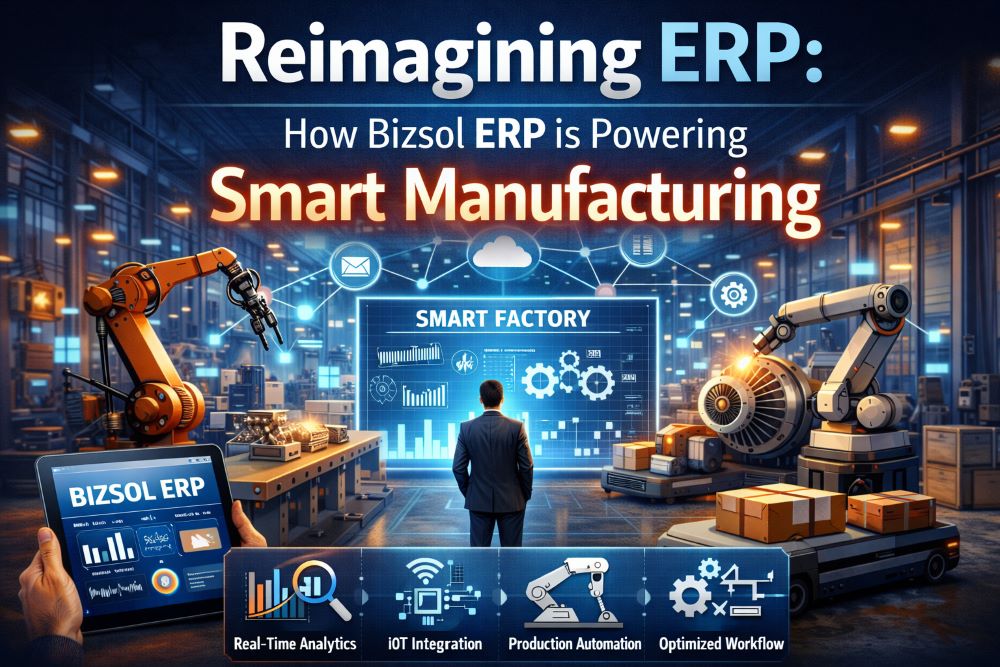
One of the challenges in forging is managing production schedules, inventory, and customer demands in real time. This is where Bizsol ERP Powered by AI, designed specifically for the forging industry, plays a crucial role. By integrating AI modules, Bizsol ERP helps companies forecast demand, optimize raw material usage, and track each forged component from furnace to dispatch. For example, a forging unit can use Bizsol ERP to get real-time insights on furnace load, die utilization, and order tracking—allowing managers to take quick, data-backed decisions. This reduces delivery delays and improves overall equipment effectiveness (OEE).
Conclusion
AI is not here to replace human expertise in forging—it is here to enhance it. With platforms like Bizsol ERP, which bring AI and industry-specific intelligence together, forging companies can achieve end-to-end digital transformation—from shop-floor operations to supply chain visibility.